Friday, 18 July 2014

HE THOUGHT US HOW TO LAUGH : REMEMBERING MEHMOOD


HE THOUGHT US HOW TO LAUGH - REMEMBERING MEHMOOD

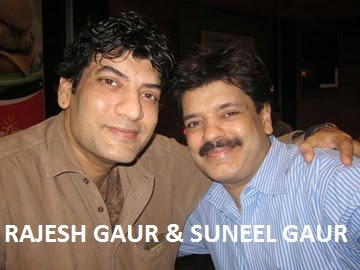
WRITTEN BY: RAJESH V. GAUR and SUNEEL V. GAUR

EMAIL: sunrise607@rediffmail.com

 Actor Mehmood’s death anniversary will be observed on 23rd July 2014. RAJESH V. GAUR AND SUNEEL V. GAUR chronicle the life and times of the star.

The inimitable Mehmood was Bollywood’s best-known comedian. Mehmood made the comedian’s role an integral part of the story line. Often the comedian’s plight proved more interesting than even the hero’s romance. Thanks to Mehmood comedy was king in the 1960s and Mehmood was the uncrowned king of this genre.

                                       
 Mehmood was the son of character-actor/dancer Mumtaz Ali and used to tag along with his father to the film studios. He began acting as a (reluctant) child actor in some Bombay Talkies’ films like Kismet Mehmood’s first real role in films, he played a gangster in Guru Dutt’s suspense thriller – CID. After that, Guru Dutt gave him a small part in Pyaasa.

While he was struggling in Bombay Talkies, he made friends with another upcoming actor Kundan. Their friendship lasted through thick and thin and they were friends forever. Kundan was a grea help to him during his days of struggle.
                                                     
 
Mehmood with his dear friend Kundan.
 
Luckily for Mehmood, he got his first noticeable “break” in Parvarish (1958), in which he landed a role as Raj kapoor the lead actor gave him a real tough time, since he was a newcomer. Years later, when Mehmood was at the peak of his career – Mehmood single-handedly spoofed them all in a triple role in the film Humjoli.


 After Paravrish, Mehmood got meatier roles in films like Gumnam, Pyar Kiye Jaa and Pyar Hi Pyar. In 1961, he played the lead comedian in Sasural. This was followed by – hits like Love in Tokyo and Ziddi etc. Mehmood's his fans just could not get enough of him as a “side-comedian” in the movies. And a time came, when he was so much “in demand” that producers approached him, offering him full-length comedy films.
Mehmood teamed up with another comedian, I. S. Johar, in Namasteji. The comic duo went on to make several more capers – which immortalized them in Bollwood , by incorporating their names in the film’s titles – Johar Mehmood in Goa followed by Johar Mehmood in Hong Kong. By the early 70s, Mehmood was at then at the peak of his comic career. He exhibited a rare ability to gauge the mood of the cinema-going audience – especially the frontbenchers!
Mehmood’s super stardom caused a lot of insecurity and anxiety in Bollywood acting circles as he was a scene stealer and overshadowed even the heroes. After two decades of success, Mehmood’s comedy began to come undone. His caricatures – especially his spoofs on South Indians -- had begun to bore the audiences. Sadly he could not re-invent himself as effortlessly as he had in the past.
                                         
                                               
 Thus Mehmood decided to concentrate on his own production house which made films like Chhote Nawab, Bhoot Bangla, Padosan. Kunwara Baap
, etc. He also made Bombay to Goa and gave the then struggling newcomer Amitabh Bachchan the lead role,thus helping him carve a niche in Bollywood.
In the 1990s Mehmood was keeping indifferent health and he had also lost the ability to feel the pulse of film buffs . He was eventually eclipsed by the new breed of comediens and retired from films.
Mehmood will forever be remembered as he appeared in his heydays – as the King of Comedy. He taught the film buffs the ability to laugh!


  WRITTEN BY: RAJESH V. GAUR and SUNEEL V. GAUR

Tuesday, 15 July 2014

PERFECTION WAS NAUSHAD SAHAB'S MOTTO

PERFECTION WAS NAUSHAD SAHAB'S MOTTO

WRITTEN BY: RAJESH V. GAUR and SUNEEL V. GAUR
EMAIL: sunrise607@rediffmail.com

 Music maestro Naushad’s birth anniversary will be observed on 25th December. The Lucknow born Naushad’s orthodox family was against his growing passion for film music and he often got caned due to his love for music. But there was no stopping Naushad saab, the film buff, from pursuing his goal of becoming a music director.After working as an assistant to many music directors of the time Naushad hit big time as an independent music with the successful Premnagar in 1940. But it was the music of Rattan in 1944 that etched Naushad’s name forever in the annals of Indin film music history. The film and the songs are remembered to this day.                                    


Naushad churned out hit after hit in the 1940s mainly in the films of A.R. Kardar - Shahjehan, Dard, Dillagi, Dulari, and Mehboob Khan - Anmol Ghadi (1946), Anoki Ada, Andaaz,etc.Naushad was among the early composers, who, gave Lata Mangeshkar an opportunity to sing for Andaaz and Dulari which were instrumental in her rise to the top along with Mahal.
But conceivably Naushad`s supreme contribution was to base film songs on Indian Classical Music. Many of his compositions were inspired by Ragas and he even used distinguished classical artistes like Ustad Amir Khan and D.V. Pulaskar in Baiju Bawra (1952) and Ustad Bade Gulam Ali Khan in Mughal-e-Azam (1960). Baiju Bawra demonstrated Naushad`s grasp of classical music. Lata Mangeshkar once said the music Naushad saab composed for Baiju Bawra surprised her as it It was entirely different from what he had done before. The purity of the ragas was maintained to the greatest possible extent.    
                                             
                                          
                          Naushad with friend writer Vrajendra Gaur 

 Naushad used to study every aspect of his tunes thoroughly. If he weren`t contented with even one word, he would ask the lyricist to pen the entire song again, to his satisfaction. It is important to mention here that most of Naushad's songs were written by Shakeel and sung by Rafi. He would take a fortnight to compose a single song. Perfection was his motto.

This condensed workload worked to his advantage as he went on to score the music for perennial classics - Mother India (1957), Mughal-e-Azam (1960), Ganga Jamuna (1961) and Mere Mehboob (1963). In Mughal-e-Azam, Naushad`s musical score was outstanding. S it was indeed scandalous that Naushad lost the Filmfare award that year [1960], to Shankar-Jaikishen for their score in Dil Apna Aur Preet Parayee.


NAUSHAD WITH SUNEEL GAUR

With the 1960s and the decline of Dilip Kumar, Naushad who used to compose music for most of the thespian`s film also suffered a reversal of fortune as film after film of theirs came unstuck at the box-office..

It is surprising that Nausahad saab arguably the greatest music director of Hindi films won just a solitary Filmfare award for Baiju Bawra because he deserved a lot more.


 WRITTEN BY: RAJESH V. GAUR  and  SUNEEL V. GAUR

Thursday, 3 July 2014

REMEMBERING THE LEGENDARY GENIUS : MEHBOOB KHAN


REMEMBERING THE LEGENDARY GENIUS: MEHBOOB KHAN

WRITTEN BY:  SUNEEL V. GAUR  AND  RAJESH V. GAUR

EMAIL: sunrise607@rediffmail.com


Legendary Mehboob Khan who made clssics like Mother India, Anmol Ghari and Andaaz passed away 50 years ago. For a man of humble origins he did very well for himself in life.
Mehboob Khan passed away in May 1964, so this happens to be the 50 death anniversary year of the distinguished film director. He was a man of humble beginnings but despite this handicap , Mehboob became one of India's greatest filmmakers. Mehboob has always been referred to as a legend. But how many movie buffs, really know the vast repertoire of work that Mehboob Khan possessed? Mehboob's craft was learnt in the Film Theatre, the common motif in his films usually being the oppressed poor pitted against the oppressive rich be it the poor tribal against the money-grabbing capitalist in Roti (1942), the commoner against the prince in Aan (1952) or the poor peasant woman against the slimy zamindar in Aurat (1940) and Mother India (1957)
. In 1940, 41 and 42 Mehboob made three of his most important films - Aurat (1940), Bahen (1941) and Roti (1942).
Aurat highlights a peasant's love for his land. The story of a resolute young woman who starts life full of hope and dreams but ends up old and careworn. Bahen was about a brother's obsessive love for his little sister but Roti was unlike anything Mehboob had done earlier. A blistering attack on capitalism and the lust for money. Mehboob then set up his own production house Mehboob Productions.. and came out with a regular output of films like Najma (1943), Taqdeer (1943) and Humayun (1945) they did not do well.


 Anmol Ghari (1946) which starred Suraiyya and Surendranath became a money spinner.The film also had a great musical track by Naushad.
Mehboob's next masterpiece was the super hit Andaz (1949). The volatile triangle to beat all triangles, Andaz remains startlingly modern even by today's standards . Mehboob followed Andaz with Aan (1952), his first film in colour. Amar (1954) ,regarded by Mehboob as his favourite film, flopped, at the box office.
In 1957, Mehboob,remade his earlier hit Aurat as Mother India. This epic saga depicted the sufferings of an Indian peasant woman . So tremendous was its success that the film is in fact a reference point in the long-suffering mother genre. After the high of Mother India , Mehboob’s next Son of India (1962) was a big disappointment and, in fact, his weakest film. This was his last directorial venture as Mehboob Khan died in 1964.
Mehboob was a filmmaker who mixed commerce with message and comes across as a man deeply rooted to the art of filmmaking.


WRITTEN BY:  SUNEEL V. GAUR AND  RAJESH V. GAUR

Sunday, 22 June 2014

ONE OF A KIND : AMITABH BACHCHAN


ONE OF A KIND: AMITABH BACHCHAN

WRITTEN BY: RAJESH V. GAUR and  SUNEEL V. GAUR
 EMAIL: sunrise607@rediffmail.com


 Amitabh Bachchan who turns 72 on 11th October once said, "Everyone must accept that we will age and age is not always flattering."
Though he mouthed the words himself, his very success contradicts the very notion. Amitabh Bachchan may be growing old but he has shown no signs of slowing down and has indeed been the perfect example of 'aging gracefully'. In an era starkly different from his time, the seventies and eighties Bachchan still holds a firm place in the industry and commands a sense of power and respect that is unmatched till date.

Amitabh Bachchan, despite his unconventional looks managed to make a mark for himself and stand out in the glamour world of Bollywood, on the basis of his immense talent and the need he fulfilled in the changing society of his times. Though Amitabh is the favourite of the majority of cinegoers , Amitabh has often said " my favourite actors remain Dilip Kumar and Waheeda Rehman".
                        Writer Vrajendra Gaur and Amitabh Bachchan         

 It was in 1973 that Prakash Mehra, after being rejected by the top actors of that time like Dev Anand, Raaj Kumar, etc. went to Amitabh Bachchan and offered him the role of Inspector Vijay for the film Zanjeer. This revenge saga, came like a blast of fresh air in the midst of the popular romantic films and established Amitabh as the ‘Angry Young Man’. One can see a certain grace about that character. So many other actors have tried to ape Amitabh, but they've failed.

 It has been 40 years since the film released and Amitabh has not looked back since then and is still a force to reckon with. In the ensuing period he gave film lovers great hits like Don, Trishul, Sholay, Majboor, Mr.Natwarlal, Naseeb, Coolie, The Great Gambler, Amar Akbar Anthony, etc.etc. Though some of his films may not have done well Amitabh has never failed as an actor.
                                              

 With Kabhie Kushi kabhie Gham, Amitabh was freed from the shackles of playing the lead actor. Amitabh took on different shades of characters in movies like Aks and Black .Director Sanjay Leela Bhansali gave him a complex character in Black. The nuances of the character were so well brought out by Amitabh that it turned out to be an award winning performance. He was also greatly appreciated in films like Baabul in 2006, Cheeni Kum in 2007 Paa in 2009.

The hallmark of this actor lies in his consistency of churning out one great performance after another. Amitabh is also involved in a lot of humanitarian activities and does a lot of charity work. On the personal front he has been a great son, a loving husband a doting grand father and an inspirational father. Reams and Reams can be written about Amitabh but it would still not do justice to the man’s great talent and humility.

WRITTEN BY: RAJESH V. GAUR and SUNEEL V. GAUR

Saturday, 21 June 2014


CHETESHWAR PUJARA ARTICLE PUBLISHED IN MUMBAI NEWSTIME ON 8TH TO 14TH  DECEMBER 2013.
 
WRITTEN BY: RAJESH V. GAUR and SUNEEL V.  GAUR


IAN BISHOP INTERVIEW PUBLISHED IN MID BOMBAY.


IAN BISHOP INTERVIEW PUBLISHED IN MID BOMBAY ON  17TH DECEMBER 1998.

WRITTEN BY: RAJESH V. GAUR  and  SUNEEL V. GAUR

EMAIL: sunrise607@rediffmail.com

VIVIAN RICHARDS ARTICLE PUBLISHED IN MID BOMBAY


VIVIAN RICHARDS INTERVIEW PUBLISHED IN MID BOMBAY  ON 7TH  JANUARY 1999.

WRITTEN BY: RAJESH V. GAUR  and  SUNEEL V. GAUR

EMAIL: sunrise607@rediffmail.com